
Whether you’re a judge at a cannabis competition, a dispensary buyer, or just a true enthusiast, knowing how to taste cannabis like a professional is an essential skill. It’s not just about getting high — it’s about analyzing the plant in all its complexity: aroma, flavor, mouthfeel, and effects. Like wine, coffee, or craft beer, cannabis has layers of nuance that only reveal themselves with a trained palate and mindful approach.
Why Learning to Taste Cannabis Matters
In the cannabis industry, quality is everything. And while lab tests can tell you about THC content and terpene levels, only your senses can tell you how enjoyable a product really is. Professional cannabis tasting is especially important in competitions and product reviews, where expert evaluation influences consumer trends and brand reputations.
From the grower to the extractor to the end-user, understanding how to evaluate cannabis at a sensory level creates a deeper connection to the plant and to the culture around it. Plus, for cannabis marketers and SEO specialists, knowing what makes a strain special from a sensory standpoint is key to writing content that converts.
Step 1: Visual Inspection
First impressions count. Examine the bud structure, trichome density, and overall appearance. Well-grown cannabis should look fresh, frosty, and carefully trimmed. Colors can range from vibrant greens to deep purples, and orange pistils add visual appeal. Avoid buds that appear too dry, too leafy, or contain visible mold or contamination.
- Trichomes: Are they abundant and milky or amber? That’s a sign of maturity and potency.
- Density: Buds should be firm and sticky, not brittle or airy.
- Trim: A clean trim shows attention to detail and respect for the flower.
Step 2: The Aroma Test (Dry Pull)
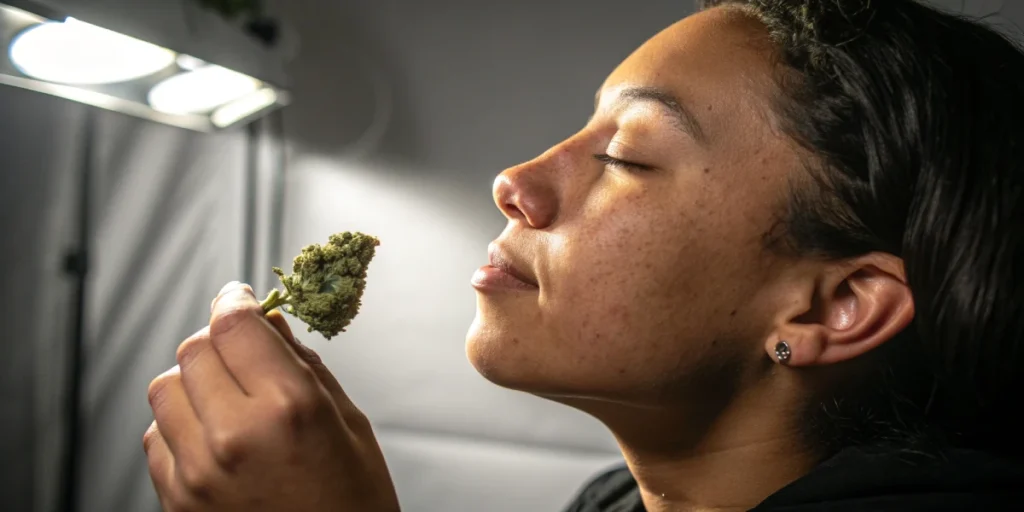
Break open the bud and inhale deeply. This dry pull gives you a clear picture of the terpene profile before combustion. Professionals often categorize aromas using the primary terpene wheel—sweet, sour, fruity, gassy, earthy, floral, spicy, etc. The best cannabis will have a complex, layered scent, not just a single dominant note.
Smell for:
- Sweet/fruity notes like citrus, berry, or tropical fruits (limonene, myrcene)
- Earthy/skunky tones (myrcene, humulene, caryophyllene)
- Gassy/diesel aromas (ocimene, pinene, terpinolene)
If the aroma is muted or smells like hay, it may be old or poorly cured.
Step 3: Flavor and Mouthfeel
Now comes the tasting. Use a clean glass pipe, vaporizer, or joint avoid bongs or rigs that may mask the flavor. Take a slow inhale, hold briefly, and exhale through the nose for a full terpene experience. Great cannabis should coat your mouth with flavor and have a smooth, non-irritating smoke or vapor.
- Inhale: Note the first flavor that hits your tongue.
- Exhale: Observe changes in taste and throat feel.
- Aftertaste: High-quality flower leaves a pleasant lingering note.
Step 4: Tracking the Effects
Professional tasting doesn’t stop at flavor. The effects are a vital part of the experience. Keep a journal or scorecard noting how the strain makes you feel within 5, 15, and 30 minutes after consumption. Pay attention to:
- Onset speed: How quickly do you feel the effects?
- Body vs. mind: Is it calming, uplifting, euphoric, sedative?
- Duration: How long do the effects last?
Combine this data with the aroma and flavor profile for a full-spectrum review. This is especially valuable in competitions where judges must rate dozens of samples accurately.
Step 5: Scoring and Calibration
Whether you’re judging in a competition or writing a product review, consistency matters. Use a structured scorecard with categories like appearance, aroma, flavor, effects, and overall impression. Give each section a weighted value based on your goals. For example, a connoisseur may prioritize flavor, while a medical reviewer might focus on effects.
Consider tasting blind to avoid brand bias. Calibrate your palate by comparing strains with similar terpene profiles or cannabinoid content, and keep your environment consistent to avoid interference from other aromas or distractions.
Developing a Professional Cannabis Palate
Like any refined skill, learning to taste cannabis like a professional takes time, practice, and mindfulness. But it’s also one of the most rewarding ways to deepen your relationship with the plant. Whether you’re reviewing flower for your blog, evaluating entries in a cannabis competition, or simply choosing the best strain for your stash, a trained palate sets you apart in an increasingly sophisticated cannabis world.
And from an SEO perspective? Describing cannabis with accuracy, sensory detail, and personality not only engages readers it drives conversions and builds trust. So, roll it, light it, taste it, and take notes. That’s how pros do it.