
Why Terpenes Matter More Than THC
For years, THC has dominated the spotlight when it comes to cannabis. It’s the cannabinoid most often associated with potency, the one labeled front and center on products, and the number many users chase for a stronger experience. But as science and consumer awareness evolve, another group of compounds is stealing the show: terpenes.
These aromatic molecules are what give cannabis its unique scent and flavor and they’re proving to play a much bigger role in your high than previously thought. If you’ve ever wondered why two strains with the same THC percentage hit differently, the answer might lie in their terpene profiles.
What Are Terpenes?
Terpenes are organic compounds found in many plants, including cannabis. They’re responsible for the aroma of lavender, the zest of lemon, the spice of pepper, and the piney freshness of rosemary. In cannabis, they create the complex and varied bouquet that distinguishes strains from each other.
But terpenes do more than just smell nice. Research shows they interact with cannabinoids and the human endocannabinoid system to shape the overall effects of cannabis. This synergy is known as the “entourage effect,” and it’s redefining how we evaluate the cannabis experience.
THC Isn’t Everything
It’s easy to fall into the trap of chasing high THC numbers, especially when shopping for flower or concentrates. But high THC doesn’t always mean better quality or more intense effects. In fact, many users report more pleasant, balanced, and nuanced experiences with strains that have lower THC but richer terpene content.
Strains with similar THC percentages can produce vastly different effects from energizing and social to deeply relaxing and introspective all because of their terpene combinations. This shows that THC alone doesn’t tell the full story.
How Terpenes Influence Effects
Each terpene has its own range of effects, and when combined with cannabinoids like THC and CBD, they modulate the experience in powerful ways. For example, limonene may boost mood and energy, while myrcene might help induce sleepiness and physical relaxation.
The way these compounds interact in your body depends on many factors: genetics, tolerance, even your mood or environment. Understanding terpenes adds depth to how you interpret your highs and helps guide smarter choices.
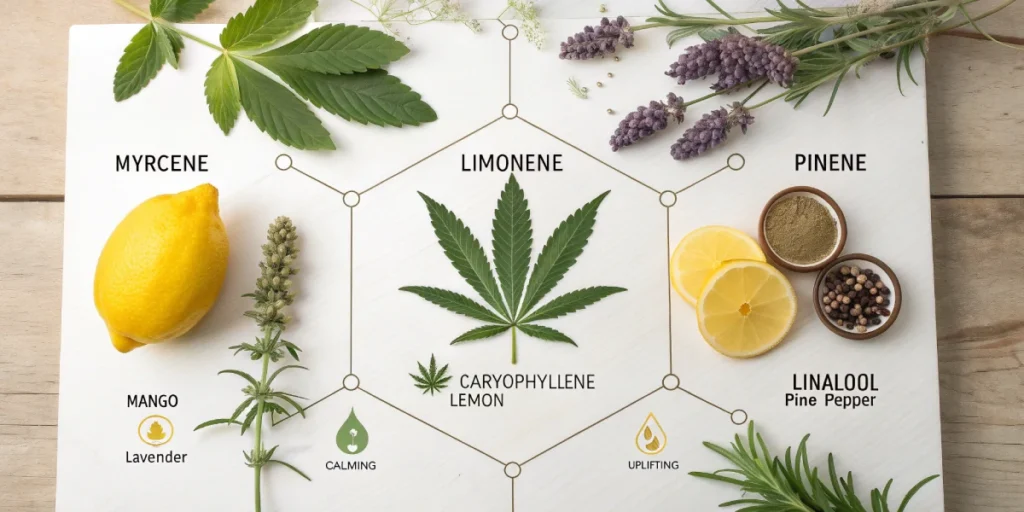
Myrcene: The Relaxing Terpene
Myrcene is one of the most common terpenes found in modern cannabis strains. It has a musky, earthy scent and is also found in mangoes, hops, and lemongrass. Known for its sedative properties, myrcene is often linked to the classic couch-lock effect associated with heavy indicas.
Many strains high in myrcene are used for sleep, muscle relaxation, and pain relief. If you’re seeking a calming, body-heavy high, look for this terpene on the lab report.
Limonene: The Uplifting Citrus Burst
Recognized by its bright citrus aroma, limonene is commonly found in sativa-dominant strains. It’s associated with uplifting and euphoric effects, making it a favorite for daytime use and social settings. Limonene is also believed to help reduce stress and anxiety.
This terpene is not only pleasant on the nose, but may enhance absorption of other terpenes and cannabinoids through its interaction with the body’s natural receptors.
Pinene: Mental Clarity in a Forest Scent
Pinene smells like you guessed it pine needles. It’s found in many herbs, such as rosemary and basil, and is linked to mental clarity, alertness, and even memory retention. Strains rich in pinene are often recommended for creative focus or productivity.
Interestingly, pinene may also help counteract some of the negative side effects of THC, such as short-term memory loss or paranoia, creating a smoother overall experience.
Caryophyllene: The Spicy Anti-Inflammatory
Caryophyllene has a distinctive peppery aroma and is the only terpene known to directly bind to cannabinoid receptors (specifically CB2). This makes it uniquely therapeutic, particularly for inflammation and pain-related conditions.
It’s commonly found in black pepper, cloves, and cinnamon and in many cannabis strains that offer physical relief without intense psychoactivity.
Linalool: Floral Calm for the Mind
Linalool carries the soft, soothing scent of lavender. It’s associated with calming, anti-anxiety, and anti-depressive effects. This terpene has been widely studied in aromatherapy and shows promise in enhancing the relaxing effects of cannabis.
Strains with high levels of linalool are ideal for unwinding in the evening, meditating, or supporting mental well-being during stressful times.
The Entourage Effect Explained
The entourage effect refers to how different cannabis compounds like THC, CBD, and terpenes work together to create unique effects. Instead of acting in isolation, they influence each other’s behavior and impact in the body.
This synergy means that a strain with 15% THC and rich terpenes can feel stronger or more enjoyable than a 25% THC strain with no aroma. It’s all about the full-spectrum experience, not just cannabinoid numbers.
How to Shop Based on Terpenes
As more dispensaries and seed banks provide terpene profiles, shopping by aroma and expected effects is becoming easier. Look beyond just THC and explore strains that match your desired experience be it relaxation, creativity, energy, or relief.
Pay attention to lab tests, ask for terpene percentages, and trust your nose. Often, the strain that smells best to you is the one your body will respond to most favorably.
Why Your Nose Knows Best
Our sense of smell is deeply connected to memory, emotion, and instinct. When you smell a cannabis strain and feel drawn to it, there’s often a biological reason behind it. Your body might be recognizing the compounds it needs.
This is why experienced consumers often rely on scent as a guide. Terpenes aren’t just pleasant they communicate with your brain and body in profound ways.
Final Thoughts
While THC is still a key player in the cannabis experience, it’s time to recognize the vital role of terpenes. These aromatic compounds don’t just add flavor and scent they shape the very nature of the high you feel.
So next time you’re selecting a strain, don’t be blinded by THC percentages. Follow your nose, explore terpene profiles, and you might just find a richer, more personalized cannabis experience.
Terpenes and Medical Cannabis
In the world of medical cannabis, terpenes are gaining more attention for their therapeutic potential. While THC and CBD have long dominated the conversation, terpenes are now being studied for their individual effects on conditions such as anxiety, pain, inflammation, and even neurological disorders.
For example, linalool shows promise in reducing symptoms of anxiety and depression, while caryophyllene may help alleviate chronic pain due to its anti-inflammatory properties. As research evolves, terpene profiles could become just as critical as cannabinoid content when prescribing or recommending cannabis for specific medical needs.
The Entourage Effect Explained
The entourage effect refers to how different cannabis compounds like THC, CBD, and terpenes work together to create unique effects. Instead of acting in isolation, they influence each other’s behavior and impact in the body.
This synergy means that a strain with 15% THC and rich terpenes can feel stronger or more enjoyable than a 25% THC strain with no aroma. It’s all about the full-spectrum experience, not just cannabinoid numbers.